Have Scientists Found Faster than Light Particles?
| By Richard N Williams
The physics world got itself into a bit of a tizz this month as scientists at CERN, the European Laboratory for Particle Physics, found an anomaly on one of their experiments, which seemed to show that some particles were travelling faster than light.
Faster than light travel for any particle is prohibited of course, according to Einstein’s Special Theory of Relativity, but the OPERA team at CERN, who fired neutrinos around a particle accelerator, travelling for 730 km, found that the neutrinos travelled the distance 20 parts per million faster than photons (light particles) meaning they broke Einstein’s speed limit.
While this experiment could prove to be one of the most important discoveries in physics, physicists are remaining sceptical, suggesting that a cause could be an error generated in the difficulties and complexities of measuring such high speeds and distances.
The team at CERN used GPS time servers, portable atomic clocks and GPS positioning systems to make their calculations, which all provided accuracy in distance to within 20cm and an accuracy of time to within 10 nanoseconds. However, the facility is underground and the GPS signals and other data streams had to be cabled down to the experiment, a latency the team are confident they took into account during their calculations.
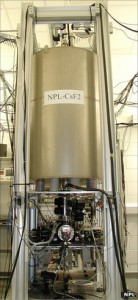
Physicists from other organisations are now attempting to repeat the experiments to see if they get the same results. Whatever the outcome, this type of groundbreaking research is only possible thanks to the accuracy of atomic clocks that are able to measure time to millionths of a second.
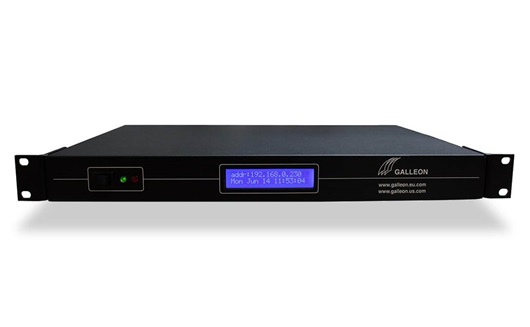
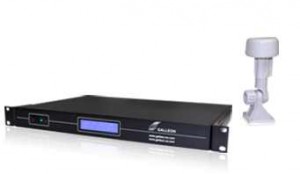
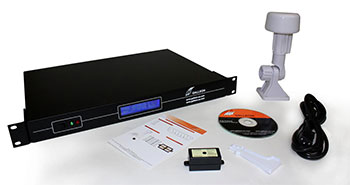
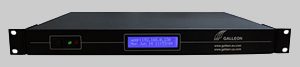
To synchronise a computer network to an atomic clock you don’t need to have access to a physics laboratory like CERN as simple NTP time servers like Galleons NTS 6001 will receive an accurate source of atomic clock time and keep all hardware on a network to within a few milliseconds of it.
 Most computer networks use
  The service, available by dialling 123 on any BT landline (British Telecom), began in 1936 when the General Post Office (GPO) controlled the telephone network. Back then, most people used mechanical clocks, which were prone to drift. Today, despite the prevalence of digital clocks, mobile phones, computers and a myriad number of other devices, the BT speaking clock still provides the time to 30 million callers a year, and other networks implement their own speaking clock systems.