Posted by Richard N Williams on May 16th, 2012
Accurate time is more crucial now that it has ever been before. While decades ago, having a wall clock a few minutes fast or slow was no big deal, however, in the modern age, with the internet and global communication, knowing the exact time is crucial for all sorts of organisations. Computer networks, for instance, need to be accurately synchronised to enable communication with other networks, and failing to do so can lead to all sorts of potential errors and problems. Read the rest of this entry »
Posted by Richard N Williams on May 15th, 2012
Computer networks need to be synchronised. Keeping an accurate, precise and synchronised form or time is essential for security, preventing errors and communicating with other computer networks. If two computers are running different time scales, all sorts of problems can ensue, from information getting lost, applications failing to occur and the whole network becoming vulnerable to unauthorised and malicious intrusion. Read the rest of this entry »
Posted by Richard N Williams on May 14th, 2012
In large organisations, such as schools, colleges, hospitals and businesses, one of the most difficult tasks is to ensure people all know the correct time. When meetings, classes and events rely on everybody arriving at a specific time, if people are late it can have a knock on effect disrupting the rest of the day. The problem is that precise and accurate time is more difficult than it sounds. While placing up wall clocks in highly visible locations will give people an indication as to what time it is, if these clocks are running different times then problems will still occur. Read the rest of this entry »
Posted by Richard N Williams on May 11th, 2012
Time rules us all. Whether it’s to know when to start work, when to begin a meeting or when to start a particular task, we all need to know the right time of day. However, for businesses keeping track of time is not as simple as it sounds. All employees in an organisation will of course have access to their own clock or watch, but because most timepieces are not completely accurate and are prone to drift, employees could all be working to different times. While a few seconds here and there probably doesn’t matter, when clocks are left to drift, seconds roll into minutes and before you know it, employees are turning up late, meetings become delayed and tasks are not accomplished on time. Read the rest of this entry »
Posted by Richard N Williams on May 10th, 2012
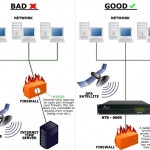
When it comes to network time synchronisation, these days, you just can’t be too careful. Accurate and secure time is essential to keep a network healthy and to avoid problems. However, getting a secure source of time is often not as easy as it sounds. Many online time sources can expose a network to vulnerabilities, such as allowing malicious code through the firewall. Furthermore, an internet time source could itself be compromised and their accuracy is never guaranteed. Read the rest of this entry »
Posted by Richard N Williams on May 9th, 2012
When a business is time reliant every second can count. For organisations such as the stock markets, online services and banking, precision and accuracy equates to money and time delays can become costly. Stocks and shares fluctuate throughout the day, while online services and banking requires precise time to ensure security and prevent bugs. However, keeping precise time is not as easy as it sounds, especially when it comes to visible time sources, such as wall clocks. Read the rest of this entry »
Posted by Richard N Williams on May 8th, 2012
Hospitals are large organisations. Hundreds of different health professionals work in the average hospital, and part of the good running and ability to provide care is to ensure good coordination. Because health care is based on multi-disciplinary teams, treatments, meetings, operations and procedures often require strict coordination to prevent wasting time and provide an efficient service. Making sure everybody has access to a synchronised and accurate time is part of this process, which is what makes precise and reliable digital wall clocks for hospitals so important. Read the rest of this entry »
Posted by Richard N Williams on May 4th, 2012
Time is an important aspect for all businesses, and in most instances regular clocks and watches are just fine for telling people when to arrive at work or when a meeting is about to start. However, for some businesses, time really matters and every second can count, and regular clocks are just not accurate enough. In the financial markets, for instance, stock prices can rise and fall in the space of a single second, while in organisations that rely on people being punctual, having clocks that can drift and lose synchronisation can create an inefficient service. For this reason, business digital wall clocks that keep perfect time and never lose synchronicity with each other are essential tools. Read the rest of this entry »
Posted by Richard N Williams on May 4th, 2012
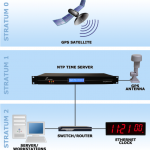
They buzz away next to the system’s servers and few people ever give them a moment’s thought, but network time servers are a crucial aspect to any computer network. Understanding their importance is important for maintain a healthy network, as time errors can lead to all sorts of problems, such as security breaches, data loss, or application failure. Read the rest of this entry »
Posted by Richard N Williams on April 30th, 2012
When it comes to network time synchronisation, Network Time Protocol (NTP) is by far the most widely used software protocol. Whether it’s for keeping a network of hundreds or thousands of machines synchronised, or keeping a single machine running true, NTP offers the solution. Without NTP, and the NTP server, many of the tasks we perform on the internet, from shopping to online banking, simply wouldn’t be possible. Read the rest of this entry »