Archive for the ‘Time Synchronisation’ Category

MSF Technical Information

Saturday, December 27th, 2008

The MSF transmission from Anthorn (latitude 54° 55′ N, longitude 3° 15′ W) is the principal means of disseminating the UK national standards of time and frequency which are maintained by the National Physical Laboratory. The effective monopole radiated power is 15 kW and the antenna is substantially omnidirectional. The signal strength is greater than 10 mV/m at 100 km and greater than 100 μV/m at 1000 km from the transmitter. The signal is widely used in northern and western Europe. The carrier frequency is maintained at 60 kHz to within 2 parts in 1012.

Simple on-off carrier modulation is used, the rise and fall times of the carrier are determined by the combination of antenna and transmitter. The timing of these edges is governed by the seconds and minutes of Coordinated Universal Time (UTC), which is always within a second of Greenwich Mean Time (GMT). Every UTC second is marked by an ‘off’ preceded by at least 500 ms of carrier, and this second marker is transmitted with an accuracy better than ±1 ms.

The first second of the minute begins with a period of 500 ms with the carrier off, to serve as a minute marker. The other 59 (or, exceptionally, 60 or 58) seconds of the minute always begin with at least 100 ms ‘off’ and end with at least 700 ms of carrier. Seconds 01-16 carry information for the current minute about the difference (DUT1) between astronomical time and atomic time, and the remaining seconds convey the time and date code. The time and date code information is always given in terms of UK clock time and date, which is UTC in winter and UTC+1h when Summer Time is in effect, and it relates to the minute following that in which it is transmitted.

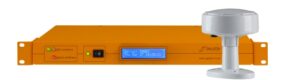
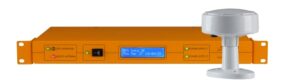
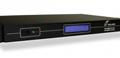
Dedicated MSF NTP Server devices are available that can connect directly to the MSF transmission.

Information Courtesy of NPL

Happy Christmas from all at Galleon Systems

Thursday, December 25th, 2008

Here at Galleon Systems, one of Europe’s leading suppliers of NTP server systems, we would like to wish all our customers, suppliers and even our competitors a Merry Christmas and a Happy New Year. We hope 2009 is a successful year for you all.

Utilising UTC

Wednesday, December 17th, 2008

To receive and distribute and authenticated UTC time source there are currently two types of NTP server, the GPS NTP server and the radio referenced NTP server. While both these systems distribute UTC in identical ways the way they receive the timing information differs.

A GPS NTP time server is an ideal time and frequency source because it can provide highly accurate time anywhere in the world using relatively cheap components.  Each GPS satellite transmits in two frequencies L2 for the military use and L1 for use by civilians transmitted at 1575 MHz, Low-cost GPS antennas and receivers are now widely available.

The radio signal transmitted by the satellite can pass through windows but can be blocked by buildings so the ideal location for a GPS antenna is on a rooftop with a good view of the sky. The more satellites it can receive from the better the signal. However, roof-mounted antennas can be prone to lighting strikes or other voltage surges so a suppressor is highly recommend being installed inline on the GPS cable.

The cable between the GPS antenna and receiver is also critical. The maximum distance that a cable can run is normally only 20-30 metres but a high quality coax cable combined with a GPS amplifier placed in-line to boost the gain of the antenna can allow in excess of 100 metre cable runs. This can provide difficulties in installation in larger buildings if the server is too far from the antenna.

An alternative solution is to use a radio referenced NTP time server. These rely on a number of national time and frequency radio transmissions that that broadcast UTC time. In Britain the signal (called MSF) is broadcast by the National Physics Laboratory in Cumbria which serves as the United Kingdom’s national time reference, there are also similar systems in the USA (WWVB) and in France, Germany and Japan.

A radio based NTP server usually consists of a rack-mountable time server, and an antenna, consisting of a ferrite bar inside a plastic enclosure, which receives the radio time and frequency broadcast. It should always be mounted horizontally at a right angle toward the transmission for optimum signal strength. Data is sent in pulses, 60 a second. These signals provides UTC time to an accuracy of 100 microseconds, however, the radio signal has a finite range and is vulnerable to interference.

2008 Will be a second longer Leap Second to be added to UTC

Tuesday, December 16th, 2008

New Year’s celebrations will have to wait another second this year as the International Earth Rotation and Reference Systems Service (IERS) have decided to 2008 is to have Leap Second added.

IERS announced in Paris in July that a positive Leap Second was to be added to 2008, the first since Dec. 31, 2005. Leap Seconds were introduced to compensate for the unpredictability of the Earth’s rotation and to keep UTC (Coordinated Universal Time) with GMT (Greenwich Meantime).

The new extra second will be added on the last day of this year at 23 hours, 59 minutes and 59 seconds Coordinated Universal Time — 6:59:59 pm Eastern Standard Time. 33 Leap Seconds have been added since 1972

NTP server systems controlling time synchronisation on computer networks are all governed by UTC (Coordinated Universal Time). When an additional second is added at the end of the year UTC will automatically be altered as the additional second. #

Whether a NTP server receives a time signal fro transmissions such as MSF, WWVB or DCF or from the GPS network the signal will automatically carry the Leap Second announcement.

Notice of Leap Second from the International Earth Rotation and Reference Systems Service (IERS)

SERVICE INTERNATIONAL DE LA ROTATION TERRESTRE ET DES SYSTEMES DE REFERENCE

SERVICE DE LA ROTATION TERRESTRE
OBSERVATOIRE DE PARIS
61, Av. de l’Observatoire 75014 PARIS (France)
Tel.      : 33 (0) 1 40 51 22 26
FAX       : 33 (0) 1 40 51 22 91
e-mail    : services.iers@obspm.fr

http://hpiers.obspm.fr/eop-pc

Paris, 4 July 2008

Bulletin C 36

To authorities responsible for the measurement and distribution of time

UTC TIME STEP
on the 1st of January 2009

A positive leap second will be introduced at the end of December 2008.
The sequence of dates of the UTC second markers will be:

2008 December 31,     23h 59m 59s
2008 December 31,     23h 59m 60s
2009 January   1,      0h  0m  0s

The difference between UTC and the International Atomic Time TAI is:

from 2006 January 1, 0h UTC, to 2009 January 1  0h UTC  : UTC-TAI = – 33s
from 2009 January 1, 0h UTC, until further notice       : UTC-TAI = – 34s

Leap seconds can be introduced in UTC at the end of the months of December

Atomic Clocks The Future of Time

Saturday, December 13th, 2008

Methods of keeping track of time have altered throughout history with ever increasing accuracy has being the catalyst for change.

Most methods of timekeeping have traditionally been based on the movement of the Earth around the Sun. For millennia, a day has been divided into 24 equal parts that have become known as hours. Basing our timescales on the rotation of the Earth has been adequate for most of our historical needs, however as technology advances, the need for an ever increasingly accurate timescale has been evident.

The problem with the traditional methods became apparent when the first truly accurate timepieces – the atomic clock was developed in the 1950’s. Because these timepieces  was based on the frequency of atoms and were accurate to within a second every million years it was soon discovered that our day, that we had always presumed as being precisely 24 hours, altered from day to day.

The affects of the Moon’s gravity on our oceans causes the Earth to slow and speed up during its rotation – some days are longer than 24 hours whilst others are shorter. Whilst this minute differences in the length of a day have made little difference to our daily lives it this inaccuracy has implications for many of our modern technologies such as satellite communication and global positioning.

A timescale has been developed to deal with the inaccuracies in the Earth’s spin – Coordinated Universal Time (UTC). It is based on the traditional 24-hour Earth rotation known as Greenwich Meantime (GMT) but accounts for the inaccuracies in the earth’s spin by having so-called ‘Leap Seconds’ added (or subtracted).

As UTC is based on the time told by atomic clocks it is incredibly accurate and therefore has been adopted as the World’s civilian timescale and is used by business and commerce all over the globe.

Most computer networks can be synchronised to UTC by using a dedicated NTP time server.

Atomic Clocks and the NTP Server Using Quantum Mechanics to Tell the Time

Thursday, December 11th, 2008

Telling the time is not as straight forward as most people think. In fact the very question, ‘what is the time?’ is a question that even modern science can fail to answer. Time, according to Einstein, is relative; it’s passing changes for different observers, affected by such things as speed and gravity.

Even when we all live on the same planet and experience the passing of time in a similar way, telling the time can be increasingly difficult. Our original method of using the Earth’s rotation has since been discovered to be inaccurate as the Moon’s gravity causes some days to be longer than 24 hours and a few to be shorter. In fact when the early dinosaurs were roaming the Earth a day was only 22 hours long!

Whilst mechanical and electronic clocks have provided us with some degree accuracy, our modern technologies have required far more accurate time measurements. GPS, Internet trading and air traffic control are just three industries were split second timing is incredibly important.

So how do we keep track of time? Using the Earth’s rotation has proven unreliable whilst electrical oscillators (quartz clocks) and mechanical clocks are only accurate to a second or two per day. Unfortunately for many of our technologies a second inaccuracy can be far too long. In satellite navigation, light can travel 300,000 km in just over a second, making the average sat-nav unit useless if there was one second of inaccuracy.

The solution to finding an accurate method of measuring time has been to examine the very small – quantum mechanics. Quantum mechanics is the study of the atom and its properties and how they interact. It was discovered that electrons, the tiny particles that orbit atoms changed the path that they orbit and released a precise amount of energy when they do so.

In the case of the caesium atom this occurs nearly nine billion times a second and this number never alters and so can be used as an ultra reliable method of keeping track of time. Caesium atoms are use din atomic clocks and in fact the second is now defined as just over 9 billion cycles of radiation of the caesium atom.

Atomic clocks
are the foundation for many of our technologies. The entire global economy relies on them with the time relayed by NTP time servers on computer networks or beamed down by GPS satellites; ensuring the entire world keeps the same, accurate and stable time.

An official global timescale, Coordinated Universal Time (UTC) has been developed thanks to atomic clocks allowing the whole world to run the same time to within a few thousandths of a second from each other.

Keeping Time with the Rest of the World

Monday, December 8th, 2008

A time server is a common office tool but what is it for?

We are all used to having a different time from the rest of the world. When America is waking up, Honk Kong is going to bed which is why the world is divided into time zones. Even in the same time-zone there can still be differences. In mainland Europe for instance most countries are an hour ahead of the UK because of Britain’s seasonal clock changing.

However, when it comes to global communication, having different times all over the world can cause problem particularly if you have to conduct time sensitive transactions such as buying or selling shares.

For this purpose it was clear by the early 1970’s that a global timescale was required. It was introduced on 1 January 1972 and was called UTC – Coordinated Universal Time. UTC is kept by atomic clock but is based on Greenwich Meantime (GMT – often called UT1) which is itself a timescale based on the rotation of the Earth. Unfortunately the Earth varies in its spin so UTC accounts for this by adding a second once or twice a year (Leap Second).

Whilst controversial to many, leap seconds are needed by astronomers and other institutions to prevent the day from drifting otherwise it would be impossible to work out the position of the stars in the night sky.

UTC is now used all over the world. Not only is it the official global timescale but is used by hundreds of thousands of computer networks all over the world.

Computer networks use a network time server to synchronise all devices on a network to UTC. Most time servers use the protocol NTP (Network Time Protocol) to distribute time.

NTP time servers receive the time from atomic clocks by either long-wave radio transmissions from national physics laboratories or from the GPS network (Global Positioning System). GPS satellites all carry an onboard atomic clock that beams the time back to Earth. Whilst this time signal is not strictly speaking UTC (it is known as GPS time) because of the accuracy of the transmission it is easily converted to UTC by a GPS NTP server.

How an Atomic Clock Works

Friday, December 5th, 2008

Atomic clocks are used for thousands of applications all over the world. From controlling satellites to even synchronising a computer network using a NTP server, atomic clocks have changed the way we control and govern time.

In terms of accuracy an atomic clock is unrivalled. Digital quartz clocks may keep accurate time for a week, not losing more than a second but an atomic clock can keep time for millions of years without drifting as much.

Atomic clocks work on the principle of quantum leaps, a branch of quantum mechanics which states that an electron; a negatively charged particle, will orbit a nucleus of an atom (the centre) in a certain plain or level. When it absorbs or releases enough energy, in the form of electromagnetic radiation, the electron will jump to a different plane – the quantum leap.

By measuring the frequency of the electromagnetic radiation corresponding to the transition between the two levels, the passage of time can be recorded. Caesium atoms (caesium 133) are preferred for timing as they have 9,192,631,770 cycles of radiation in every second. Because the energy levels of the caesium atom (the quantum standards) are always the same and is such a high number, the caesium atomic clock is incredibly precise.

The most common form of atomic clock used in the world today is the caesium fountain. In this type of clock a cloud of atoms is projected up into a microwave chamber and allowed to fall down under gravity. Laser beams slow these atoms down and the transition between the atom’s energy levels are measured.

The next generation of atomic clocks are being developed use ion traps rather than a fountain. Ions are positively charged atoms which can be trapped by a magnetic field. Other elements such as strontium are being used in these next generation clocks and it is estimated that the potential accuracy of a strontium ion trap clock could be 1000 times that of the current atomic clocks.

Atomic clocks are utilised by all sorts of technologies; satellite communication, the Global Positioning System and even Internet trading is reliant on atomic clocks. Most computers synchronise indirectly to an atomic clock by using a NTP server. These devices receive the time from an atomic clock and distribute around their networks ensuring precise time on all devices.

Synchronising to an Atomic Clock

Thursday, December 4th, 2008

Atomic clocks are the pinnacle of time keeping devices. Modern atomic clocks can keep time to such accuracy that in 100,000,000 years (100 million) they do not lose even a second in time. Because of this high level of accuracy, atomic clocks are the basis for the world’s timescale.

To allow global communication and time sensitive transactions such as the buying of stacks and shares a global timescale, based on the time told by atomic clocks, was developed in 1972. This timescale, Coordinated Universal Time (UTC) is governed and controlled by the International Bureau of weights and Measures (BIPM) who use a constellation of over 230 atomic clocks from 65 laboratories all over the world to ensure high levels of accuracy.

Atomic clocks are based on the fundamental properties of the atom, known as quantum mechanics.  Quantum mechanics suggest that an electron (negatively charged particle) that orbits an atom’s nucleus can exist in different levels or orbit planes depending if they absorb or release the correct amount of energy. Once an electron has absorbed or released enough energy in can ‘jump’ to another level, this is known as a quantum jump.

The frequency between these two energy states is what is used to keep time. Most atomic clocks are based on the caesium atom which has 9,192,631,770 periods of radiation corresponding to the transition between the two levels. Because of the accuracy of caesium clocks the BIPM now considers a second to be defined as 9,192,631,770 cycles of the caesium atom.

Atomic clocks are used in thousands of different applications where precise timing is essential. Satellite communication, air traffic control, internet trading and GPs all require atomic clocks to keep time. Atomic clocks can also be used as a method of synchronising computer networks.

A computer network using a NTP time server can use either a radio transmission or the signals broadcast by GPS satellites (Global Positioning System) as a timing source. The NTP program (or daemon) will then ensure all devices on that network will be synchronised to the time as told by the atomic clock.

By using a NTP server synchronised to an atomic clock, a computer network can run the identical coordinated universal time as other networks allowing time sensitive transactions to be conducted from across the globe.

Where to Find a Public NTP server

Wednesday, December 3rd, 2008

NTP servers are used by computer networks as a timing reference for synchronisation. An NTP server is really a communication device that receives the time from an atomic clock and distributes it. NTP servers that receive a direct atomic clock time are known as stratum 1 NTP servers.

A stratum 0 device is an atomic clock itself. These are highly expensive and delicate pieces of machinery and are only to be found in large scale physics laboratories. Unfortunately there are many rules governing who can access a stratum 1 server because of bandwidth considerations. Most stratum 1 NTP servers are set-up by universities or other non-profit organisations and so have to restrict who accesses them.

Fortunately stratum 2 time servers can offer decent enough accuracy as a timing source and any device receiving a time signal can itself be used as a time reference (a device receiving time from a stratum 2 device is a stratum 3 server. Devices that receive time from a stratum 3 server are stratum 4 devices, and so-on).

Ntp.org, is the official home of the NTP pool project and by far the best place to go to find a public NTP server. There are two lists of public servers available in the pool; primary servers, which displays the stratum 1 servers (most of which are closed access) and secondary which are all stratum 2 servers.

When using a public NTP server is important to abide by the access rules as failure to do so can cause the server to become clogged with traffic and if the problems persist possibly discontinued as most public NTP servers are set-up as acts of generosity.

There are some important points to remember when using a timing source from over the Internet. First, Internet timing sources can’t be authenticated. Authentication is an in-built security measure utilised by NTP but unavailable over the net. Secondly, to use an Internet timing source requires an open port in your firewall. A hole in a firewall can be used by malicious users and can leave a system vulnerable to attack.

For those requiring a secure timing source or when accuracy is highly important, a dedicated NTP server that receives a timing signal from either long wave radio transmissions or the GPs network.