Archive for the ‘gps time server’ Category

GPS as a Timing Reference for NTP servers

Friday, April 16th, 2010

The GPS system is familiar to most people. Many cars now have a GPS satellite navigation device in their cars but there is more to the Global Positioning System than just wayfinding.

The Global Positioning System is a constellation of over thirty satellites all spinning around the globe. The GPS satellite network has been designed so that at any point in time there is at least four satellites overhead – no matter where you are on the globe.

Onboard each GPS satellite there is a highly precise atomic clock and it is the information from this clock that is sent through the GPS transmissions which by triangulation (using the signal from multiple satellites) a satellite navigation receiver can work out your position.

But these ultra precise timing signals have another use, unbeknown to many users of GPS systems. Because the timing signals from the GPS atomic clocks are so precise, they make a good source of time for synchronising all sorts of technologies – from computer networks to traffic cameras.

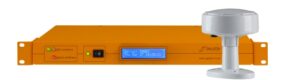
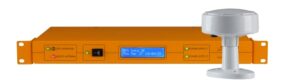
To utilise the GPS timing signals, a GPS time server is often used. These devices use NTP (Network Time Protocol) to distribute the GPS timing source to all devices on the NTP network.

NTP regularly checks the time on all the systems on its network and adjusts it accordingly if it has drifted to what the original GPS timing source is.

As GPS is available anywhere on the planet it provides a really handy source of time for many technologies and applications ensuring that whatever is synchronised to the GPS timing source will remain as accurate as possible.

A single GPS NTP server can synchronize hundreds and thousands of devices including routers, PCs and other hardware ensuring the entire network is running perfectly coordinated time.

Technologies that rely on Atomic Clocks (Part 2)

Sunday, March 21st, 2010

GPS is not the only technology that is dependent on atomic clocks. The high levels of accuracy that are supplied by atomic clocks are used in other crucial technologies that we take for granted everyday.

Air traffic Control Not only are all aeroplanes and airliners now equipped with GPS to enable pilots and ground staff to know their exact location but atomic clocks are also used by air traffic controllers who need precise and accurate measurements and time between planes.

Traffic Lights and Road Congestion Systems – Traffic lights are another system that relies on atomic clock timing. Accuracy and synchronization is vital for traffic light systems as small errors in synchronization could lead to fatal accidents.

Congestion cameras and other systems such as parking metres also use atomic clocks as a basis of their timekeeping as this prevents any legal issues when issuing penalty notices.

CCTV – Closed circuit television is another large scale user of atomic clocks. CCTV cameras are often used in the fight against crime but as evidence they are ineffective in a court of law unless the timing information on the CCTV camera can be proved to be accurate. Failure to do so could lead to criminals escaping prosecution because despite the identification by the camera, proof that it was at the time and date of the offence can’t be clarified without accuracy and synchronization.

Internet – Many of the applications we now entrust to the internet are only made possible thanks to atomic clocks. Online trading, internet banking and even online auction houses all need accurate and synchronized time.

Imagine taking your savings from your bank account only finding that you can withdraw them again because another computer has a slower clock or imagine bidding on an internet auction site only to have your bid rejected by a bid that came before yours because it was made on a computer with a slower clock.

Using atomic clocks as a source for time is relatively straight forward for many technologies. Radio signals and even the GPS transmissions can be used as a source of atomic clock time and for computer systems, the protocol NTP (Network Time Protocol) will ensure any sized network will be synchronized perfectly together. Dedicated NTP time servers are used throughout the world in technologies and applications that require precise time.

Technologies that rely on Atomic Clocks (Part 1)

Wednesday, March 17th, 2010

Atomic clocks are the most accurate timekeeping devices known to man. There accuracy is incomparable to other clocks and chronometers in that whilst even the most sophisticated electronic clock will drift by a second every week or two, the most modern atomic clocks can keep running for thousands of years and not lose even a fraction of a second.

The accuracy of an atomic clock is down to what they use as their basis for time measurement. Instead of relying on an electronic current running through a crystal like an electronic clock, an atomic clock uses the hyperfine transition of an atom in two energy states. Whilst this may sound complicated, it is just an unfaltering reverberation that ‘ticks’ over 9 billion times each second, every second.

But why such accuracy really necessary and what technologies are atomic clocks employed in?

It is by examining the technologies that utilise atomic clocks that we can see why such high levels of accuracy are required.

GPS – Satellite navigation

Satellite navigation is a huge industry now. Once just a technology for the military and aviators, GPS satellite navigation is now used by road users across the globe. However, the navigational information provided by satellite navigation systems like GPS is solely reliant on the accuracy of atomic clocks.

GPS works by triangulating several timing signals that are deployed from atomic clocks onboard the GPS satellites. By working out when the timing signal was released from the satellite the satellite navigational receiver can just how far away it is from the satellite and by using multiple signals calculate where it is in the world.

Because of these timing signals travel at the speed of light, just one second inaccuracy within the timing signals could lead to the positing information being thousands of miles out. It is testament to the accuracy of GPS atomic clocks that currently a satellite navigation receiver is accurate to within five metres.

Network Time Protocol and Computer Time Synchronization

Tuesday, February 23rd, 2010

Ask any network administrator or IT engineer and ask them how important network time synchronization is and you’ll normally get the same answer – very.

Time is used in almost all aspects of computing for logging when events have happened. In fact timestamps are the only reference a computer can use to keep tracks of tasks it has done and those that it has yet to do.

When networks are unsynchronized the result can be a real headache for anybody tasked with debugging them. Data can be often lost, applications fail to commence, error logging is next to impossible, not to mention the security vulnerabilities that can result if there is no synchronized network time.

NTP (Network Time Protocol) is the leading time synchronisation application having been around since the 1980’s. It has been constantly developed and is used by virtually every computer network that requires accurate time.

Most operating systems have a version of NTP already installed and using it to synchronise a single computer is relatively straight forward by using the options in the clock settings or task bar.

However, by using the inbuilt NTP application or daemon on a computer will result in the device using a source of internet time as a timing reference. This is all well and good for single desk top machines but on a network a more secure solution is required.

It is vital on any computer network that there are no vulnerabilities in the firewall which can lead to attacks from malicious users. Keeping a port open to communicate with an internet timing source is one method an attacker can use to enter a network.

Fortunately there are alternatives to using the internet as a timing source. Atomic clock time signals can be received using long wave radio or GPS transmissions.

Dedicated NTP time server devices are available that make the process of time synchronisation extremely easy as the NTP servers receives the time (externally to the firewall) and can then distribute to all machines on a network – this is done securely and accurately with most networks synchronised to an NTP server working to within a few milliseconds of each other.

The Effect of Solar Flares on GPS

Wednesday, February 17th, 2010

Forthcoming space weather may affect GPS devices including satellite navigation and NTP GPS time servers.

Whilst many of us have had to cope with some extreme weather last winter, further storms are on their way – this time from space.

Solar flares are a regular occurrence on the surface of the sun. Whilst scientists are not completely sure what causes them we know two things about solar flares: – they are cyclical – and are related to sunspot activity.

For that last eleven years the sun’s sunspot activity – small dark depressions that appear on the surface of the sun – has been very minimal. But this eleven year cycle has come to an end and there has been a rise in sun spots at the end of last year meaning 2010 will be a bumper year for both sunspots and solar flares.

But there is no need to worry about becoming toasted by solar flares as these bursts of hot gases that flare from the sun never get far enough to reach the Earth, however, they can effect us in different ways.

Solar flares are bursts of energy and as such emit radiation and high energy particles. On earth, we are protected by these blasts of energy and radiation by the earth’s magnetic field and ionosphere, however, satellite communications are not and this can lead to trouble.

Whilst the effect of solar flare radiation is very weak, it can slow down and reflect radio waves as they travel through the ionosphere towards Earth. This interference can cause GPS satellites in particular extreme problems as they are reliant on accuracy to provide navigational information.

While the effects of solar flares are mild, it is possible GPS devices will encounter brief periods of no signal and also the problem of inaccurate signals meaning positing information may become unreliable.

This will not just affect navigation either as the GPS system is used by hundreds and thousands of computer networks as a source of reliable time.

Whilst most dedicated GPS time servers should be able to cope with periods of instability without losing precision, for worried network administrators not wanting to go into work to find their systems have crashed because of a lack of synchronisation may want to consider using a radio referenced Network time server that uses broadcast transmission such as MSF or WVBB.

Dual NTP time servers (Network Time Protocol) are also available that can receive both radio and GPS, ensuring a source of time is always constantly available.

Choosing a Time Server for your Network

Monday, February 1st, 2010

Any network administrator will tell you how important time synchronization is for a modern computer network. Computers rely on the time for nearly everything, especially in today’s age of online trading and global communication where accuracy is essential.

Failing to ensure that computers are accurately synced together could lead to all manner of problems: data loss, security vulnerabilities, unable to conduct time sensitive transactions and difficulties debugging can all be caused by a lack of, or not adequate enough, time synchronization.

But ensuring every computer on a network has the exact same time is simple thanks to two technologies: the atomic clock and the NTP server (Network Time Protocol).

Atomic clocks are extremely accurate chronometers. They can keep time and not drift by as much of a second in thousands of years and it is this accuracy that has made possible technologies and applications such as satellite navigation, online trading and GPS.

Time synchronization for computer networks is controlled by the network time server, commonly referred to as the NTP server after the time synchronization protocol they use, Network Time Protocol.
When it comes to choosing a time server, there are really only two real type – the radio reference NTP time server and the GPS NTP time server.

Radio reference time servers receive the time from long wave transmission broadcast by physics laboratories like NIST in North America or NPL in the UK. These transmissions can often be picked up throughout the country of origin (and beyond) although local topography and interference from other electrical devices can interfere with the signal.

GPS time servers, on the other hand, use the satellite navigation signal transmitted from GPS satellites. The GPS transmissions are generated by atomic clocks onboard the satellites so they are a highly accurate source of time just like the atomic clock generated time broadcast by the physics laboratories.

Apart from the disadvantage of having to have a roof top antenna (GPS works by line of sight so a clear view of the sky is essential), GPS is obtainable literally everywhere on the planet.

As both types of time server can provide an accurate source of reliable time the decision of which type of time server should be based on the availability of long wave signals or whether it is possible to install a rooftop GPS antenna.

Using GPS as a source of Accurate Time

Thursday, January 28th, 2010

The Global Positioning System (GPS) is an increasingly popular tool, used throughout the world as a source of wayfinding and navigation. However, there is much more to the GPS network than just satellite navigation as the transmissions broadcast by the GPS satellites can also be used as a highly accurate source of time.

GPS satellites are actually just orbiting clocks as each one contains atomic clocks that generate a time signal. It is the time signal that is broadcast by the GPS satellites that satellite navigation receivers in cars and planes use to work out distance and position.

Positioning is only possible because thee time signals are so accurate. Vehicle sat navs for instance use the signals from four orbiting satellites and triangulate the information to work out the position. However, if there is just one second inaccuracy with one of the time signals then the positing information could be thousands of miles out – proving useless.

It is testament to the accuracy of atomic clocks used to generate GPS signals that currently a GPS receiver can work out its position on earth to within five metres.

Because GPS satellites are so accurate, they make an ideal source of time to synchronise a computer network to. Strictly speaking GPS time differs from the international timescale UTC (coordinated Universal Time) as UTC has had additional leap seconds added to it to ensure parity with the earth’s rotation meaning it is exactly 18 seconds ahead of GPS but is easily converted by NTP the time synchronisation protocol (Network Time Protocol).

GPS time servers receive the GPS time signal via a GPS antenna which has to be placed on the roof to receive the line of sight transmissions. Once the GPS signal is received the NTP GPS time server will distribute the signal to all devices on the NTP network and corrects any drift on individual machines.

GPS time servers are dedicated easy to use devices and can ensure millisecond accuracy to UTC without any of the security risks involved in using an internet time source.

Common Issues in Time Synchronisation

Sunday, January 24th, 2010

Time synchronization is essential in modern computer networking especially with the amount of time sensitive transactions conducted over the internet these days. Without adequate synchronization computer systems will:

  • Be vulnerable to malicious attacks
  • Susceptible to data loss
  • Unable to conduct time sensitive transactions
  • Difficult to debug

Fortunately ensuring a computer network is accurately synchronized is relatively straight forward. There different methods of synchronizing a network to the global timescale UTC (Coordinated Universal Time) but occasionally some common issues do arise.

My dedicated time server is unable to receive a signal

Dedicated NTP time servers receive the time from either long wave transmissions or GPS networks. If using a GPS NTP server then a GPS antenna needs to be situated on a roof to obtain a clear view of the sky. However, a NTP radio receiver does not need a roof mounted aerial although the signal can be vulnerable to interference and the correct angle toward the transmitter should be attained.

I am using a public time server across the Internet but my devices are not synchronised.

As public time servers can be used by anyone they can receive high levels of traffic. This can cause problems with bandwidth and mean that your time requests can’t get through. Public NTP servers can also fall victim to DDoS attacks and some high profile incidents of NTP vandalism have occurred.

Internet time servers are also stratum 2 devices, in other words they themselves have to connect to a time server to receive the correct time and because of this some online time references are wildly inaccurate.

*NB – internet time servers are also incapable of being authenticated to allow NTP to establish if the time source is coming from where it claims to be, combined with the problem of ensuring the firewall is open to receive the time requests, can mean that internet time servers present a clear risk to security.

The time on my computer seems to be off by a second to standard UTC time

You need to check if a recent leap second has been added to UTC. Leap seconds are added once or twice a year to ensure UTC and the Earth’s rotation match. Some time servers experience difficulties in making the leap second adjustment.

Why a GPS Time Server is the Number One Choice for Time Synchronization

Monday, January 18th, 2010

When it comes to synchronizing a computer network there are several choice to ensure each device is running the same time. NTP (Network Time Protocol) is the preferred choice of time synchronization protocols but there are a multitude of methods in how NTP receives the time.

The NTP Daemon is installed on most operating systems such as windows and applications such as Windows Time are quite capable of receiving a source of UTC time (Coordinated Universal Time) from across the internet.

UTC time is the preferred time source used by computer networks as it is kept true by atomic clocks. UTC, as the name suggests, is also universal and is used by computer networks all over the world as a source to synchronize too.

However, internet sources of UTC are to recommended for any organisation where security and accuracy are a concern. Not only can the distant from host (internet time server) to the client (your computer network) can never be accurately measured leading to a drop in precision. Furthermore, any source of internet time will need access through the firewall (usually through the UDP 123 port). And by leaving this port open, malicious users and hackers can take advantage and gain access to the system.

Dedicated NTP time servers are a better solution as they receive the time from an external source. There are really two types of NTP server, the radio reference time server and the GPS time server.
Radio reference time servers use signals broadcast by places like NPL (National Physical Laboratory in the UK) or NIST (National Institute of Standards and Time). While these signals are extremely accurate, precise and secure they are affected by regular maintenance on the transmitters that broadcast the signal. Also being long wave they are vulnerable to local interference.

GPS time servers on the other hand receive the time directly from GPS satellites. This GPS time is easily converted to UTC by NTP (GPS time is UTC – 17 seconds exactly as no leap seconds have been added.) As the GPS signal is available everywhere on the earth 24 hours a day, 365 days a week, there is never a risk of a loss of signal.
A single dedicated GPS time server can synchronize a computer network of hundreds, and even thousands of machines to within a few of milliseconds of UTC time.